 VapeWholesaleHub
IVG Reload Sample Approval Meeting Agenda — First-Time Importers
The price difference between two ivg reload quotes is often smaller than the cost of one failed shipment. This overview is written for buyers who would rather understand the failure modes up front than discover them after customs clearance.
Modelling a Healthy Margin
When you model ivg reload pricing, build in a realistic shrink figure. Even a well run line loses a small percentage to damage, expiry and sampling. Pretending that number is zero is how a healthy looking margin turns negative.
Watch the ivg reload price you pay over a year rather than per order. Factories respond well to visible volume, and a quarterly review is usually worth more than a hard negotiation each time.
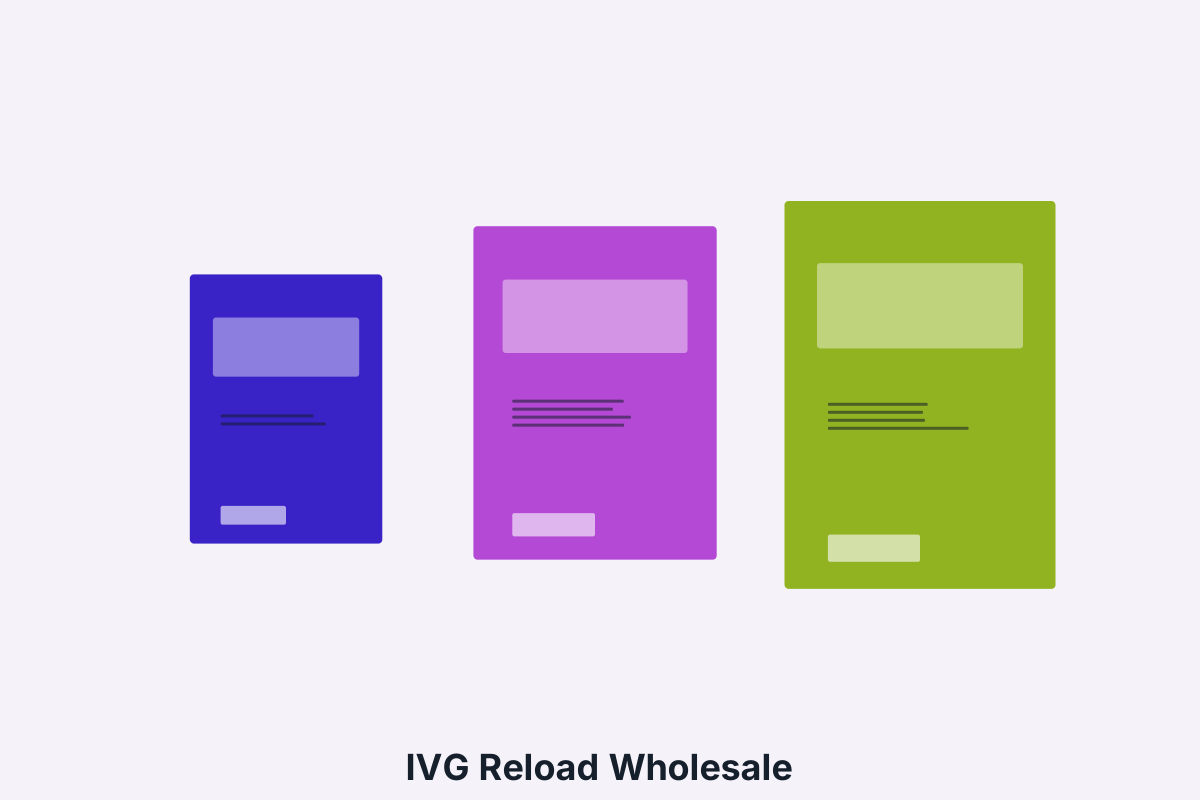
Indicative reference points for planning purposes: entry tier from USD 1.51 per unit at 2000 units, mid tier at USD 1.66, and volume tier at USD 1.01 for full container quantities. These figures move with specification, packaging and freight, so treat them as a shape rather than a quote.
Where IVG Reload Sits in the Range
A tight ivg reload range with deep availability usually outsells a wide range with thin stock. Customers who find their line in stock come back; customers who are told to wait do not.
Selling IVG Reload at Store Level
Keep the ivg reload range tidy. A half empty shelf reads as a dying line, and customers interpret it that way faster than any signage can correct.
Logistics That Protect Margin
Split ivg reload shipments across two sailings when the order is large enough. It costs slightly more but removes the risk of a single event wiping out a full quarter of stock.
Air freight makes sense for a first ivg reload order when you need to test demand quickly, but almost every steady programme moves to sea freight once volumes stabilise. Planning that switch early avoids a painful margin squeeze later.
The Specification That Matters
When we write a ivg reload specification with a distributor, we fix four things first: the resistance band, the liquid capacity tolerance, the puff count methodology and the packaging master carton. Everything else can flex without changing the customer experience.
| Product category | Accessory |
|---|---|
| Resistance band | 1.0 - 1.2 ohm |
| Capacity tolerance | +/- 5% |
| Puff count method | Machine cycle 2s on / 18s off |
| Master carton | 400 units |
| Carton weight | 6.0 kg |
| Shelf life | 12 months |
| Storage | 15-25 C, dry, away from direct light |
Practical Checklist
- Rotate stock by batch code rather than by delivery date.
- Keep sealed retained samples from every production batch.
- Start with a mixed carton and let your own sell-through decide.
- Plan the switch from air to sea freight before you need it.
- Write the complaint threshold into the order terms.
- Confirm the current customs classification with your own broker.
Frequently Asked Questions
What information do you need to quote?
Target specification, approximate quantity, destination and any packaging requirement. With those four we can usually come back with a costed option the same working day rather than a request for more information.
What happens if my market changes its rules?
Regulations move, and packaging or documentation sometimes has to follow. We keep approved artwork files on hand so that a required change is a reprint rather than a redesign, which keeps the cost and delay down.
What if I only need a small first order?
That is normal and sensible. A mixed carton lets you test ivg reload in your own market before committing to a production run, and the specification you approve at that stage carries through to larger orders unchanged.
Can you match an existing product I already sell?
Often yes, provided we can measure it properly. Send a physical sample and we will report back on what can be matched, what will differ slightly, and why. An honest gap is more useful than a vague promise.
How are price changes handled on repeat orders?
{K} pricing is reviewed against input costs and volume rather than adjusted casually. Any change is confirmed in writing before the next order is scheduled, with the reason stated so you can judge it yourself.
Next Step
Nobody wins when a first order is too large to learn from. Start with a mixed carton, check how it moves in your own market, then scale the lines that earned the shelf space.
Related Reading
- IVG Reload Market Demand: Reading the Numbers — 2026 Edition
- IVG Reload Supplier Scorecard Template — Wholesale Clubs
- Seasonal Planning for IVG Reload Inventory — Before Your Next Order
- IVG Reload Inventory Turnover Benchmarks for Stores — Cross-Border Trade
- IVG Reload Handling, Labeling and Regulatory Paperwork — Small Batch Buyers
- IVG Reload Strengths Ladder for a Balanced Cabinet — Before Your Next Order